 In the Torah portion of Tazria, it discusses the phenomenon of a person contracting Tzara’at or leprosy in response to slander or gossip. Maimonides explains[1] this is unnatural lesion that occurs on a person’s skin, clothing or house meant to indicate to a person to correct their ways and not to continue on such a destructive path. It first occurs on the walls of a person’s home. If the person changes course, it no longer occurs. If the person persists it spreads to a person’s garments and then on a person’s skin. The Talmud[2] discusses numerous other reasons why this may occur to a person including arrogance and other immoralities.
We would like to focus on an aspect of the laws of Tzara'at regardi… Read More »
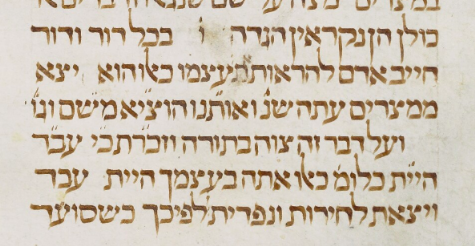
 The Haggadah presents the Exodus story in the context of the four sons: the wise, the wicked, the simpleton and the one that does not know how to ask. The Haggadah text in the Ashkenazi Siddur CCC MS 133 presents the wise question as follows: 'What does the wise son say? "What are these testimonies, statutes and judgments that the Lord our G-d commanded us?"' And accordingly you will say to him, as per the laws of the Pesach sacrifice, "We may not eat an afikoman [a dessert or other foods eaten after the meal] after [we are finished eating] the Pesach sacrifice."